
The model of stages of behavioral change in theatre and cinema: a harmonious combination of art and psychology
How directors, screenwriters and actors can apply the Transtheoretical Model of Behavior Change (Prochaska and DiClemente) to create convincing characters and manage the creative process. The abstract of an article first published in the journal Handes of the Yerevan State Institute of Theatre and Cinema, No. 28 (2025); the full text is available in Armenian.


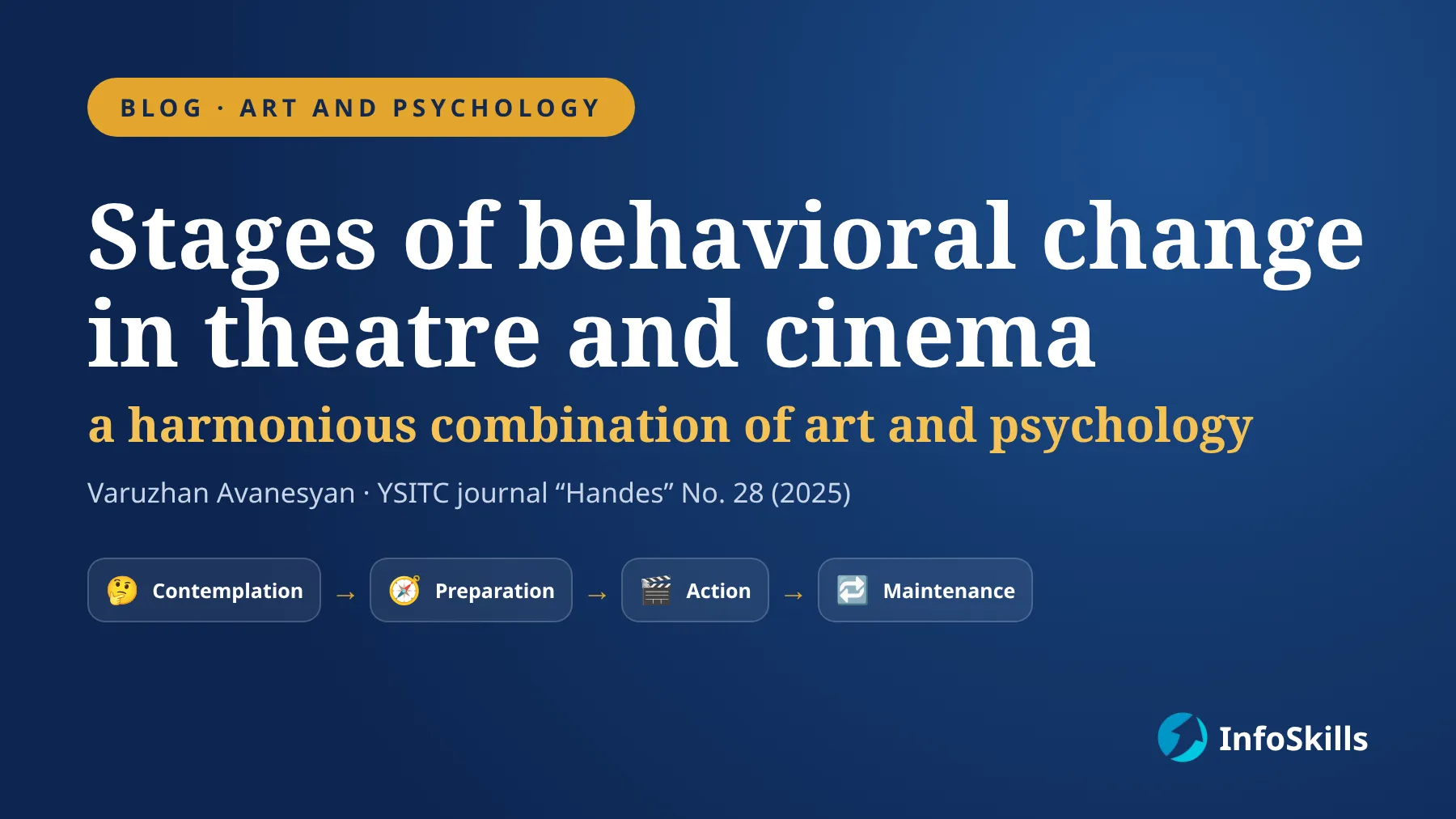
This article was first published in Armenian in the scholarly journal Handes of the Yerevan State Institute of Theatre and Cinema, No. 28 (2025). The full text is available in Armenian: read the article or download the PDF. DOI: 10.61939/29537959-2025.28-154
Varuzhan Avanesyan, Senior Lecturer, Chair of Art Management and Cultural Policy, Yerevan State Institute of Theatre and Cinema
Abstract
The Transtheoretical Model of Behavior Change (TTM) is presented in this article as a way to combine art and psychology in the fields of theatre and film. The study focuses on how narratives in theatre, film, audiovisual, and performing arts reflect the stages of behavioral change and how these art forms can be used as tools for psychological change in the audience. This article does not focus on art history, but instead provides a detailed overview of the TTM’s components, the processes of change, and its characteristics, which include its person-centered approach, dynamic nature, and practical applicability.
The article discusses how directors, screenwriters, and actors can apply the TTM create compelling and realistic characters, as well as organize creative processes. The aim of the study is to explore the application of the Transtheoretical Model of Behavior Change in theatre and film, revealing how art and psychology can jointly serve to promote positive change. The research focuses on narratives in theatre, film, audiovisual, and performing arts that reflect and represent the stages of behavioral change, and also examines how these art forms themselves can become tools for psychological change in the audience.
The object of the study is the psychological models of behavioral change manifested in theatre and film, considered in the context of interdisciplinary relationships between art and science. The subject of the research is the mechanisms of reflection and application of the stages of behavioral change through theatre and film, as well as the potential of these art forms to promote behavioral changes in the audience.
In conclusion, the TTM is proposed as a valuable tool that can enrich these art forms, contribute to individual and professional growth, and provide psychological depth and realism.
Keywords: theatrical art, film art, performing arts, creative psychology, behavioral change, behavioral change communication; Transtheoretical Model, Stages of Change, creative process, character development, audience behavior, self-reevaluation.
The full article, with the six stages of change (precontemplation, contemplation, preparation, action, maintenance, termination) applied to acting, directing, film, stage design, art management, dance, screenwriting and theatre studies, is available in Armenian.
© 2026 InfoSkills, Varuzhan Avanesyan. Reuse only with the author's permission and a link to the source.

















No comments yet. Be the first.