Soft skills for teachers: a training at Gyumri School No. 45
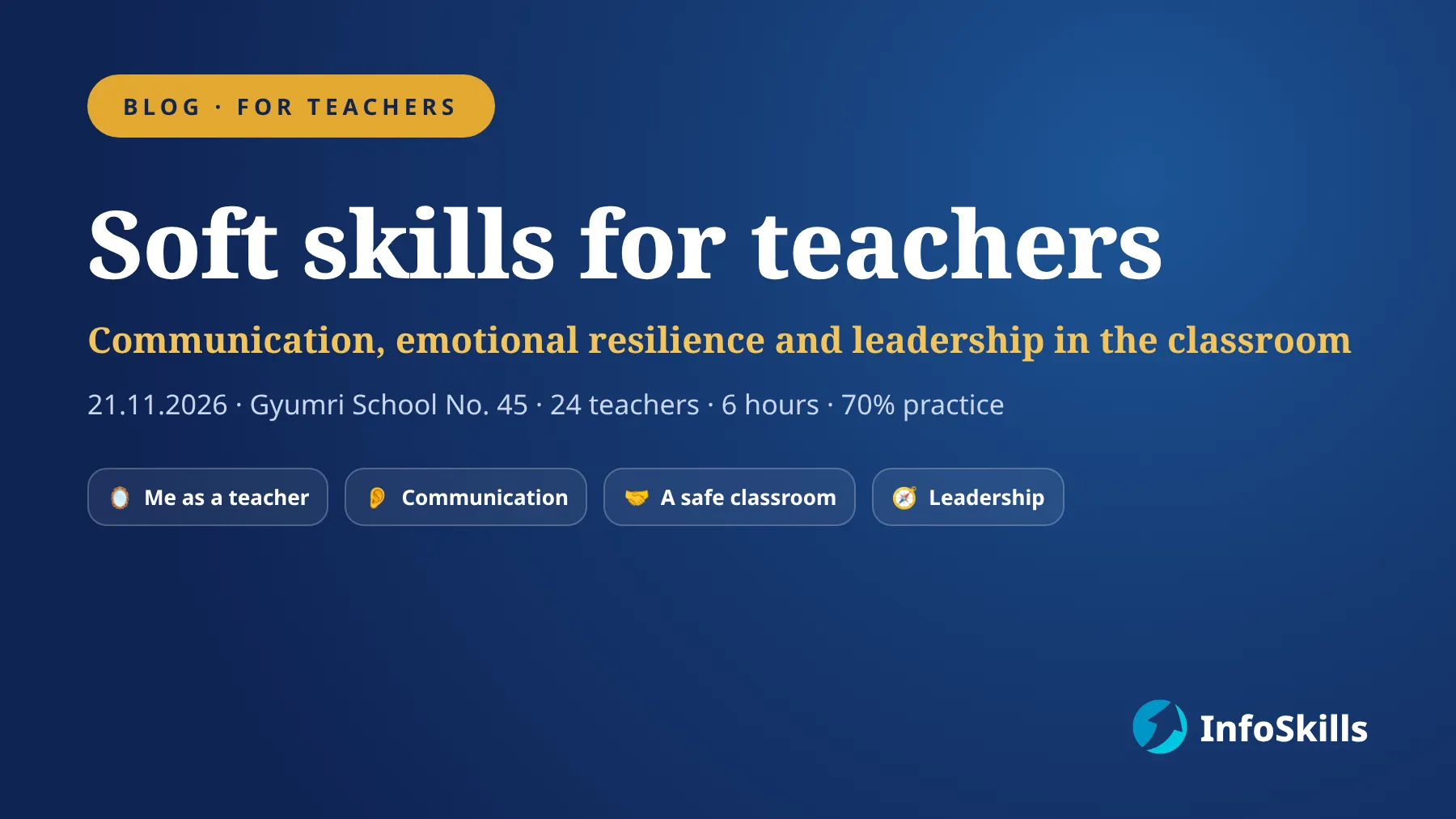
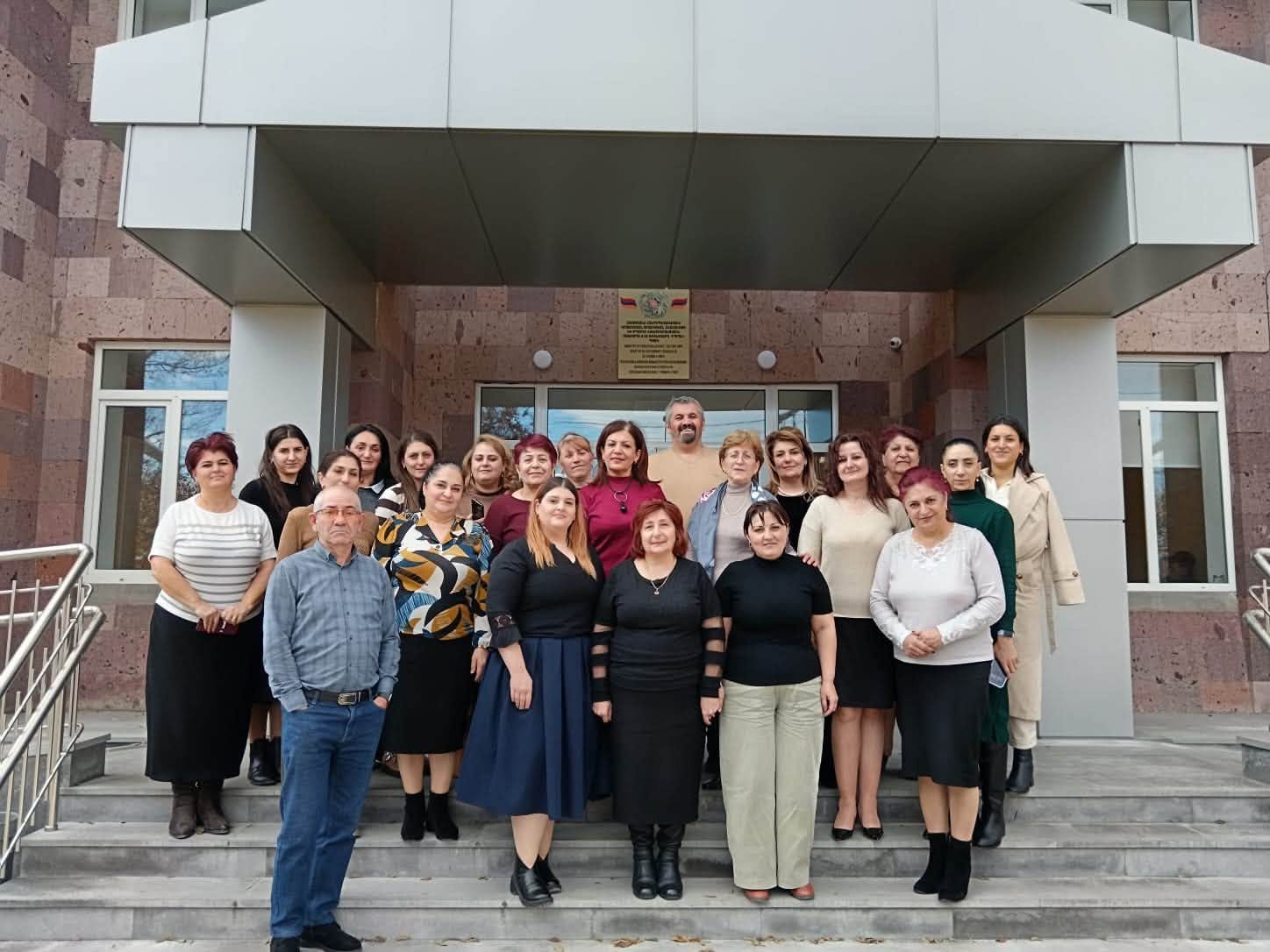
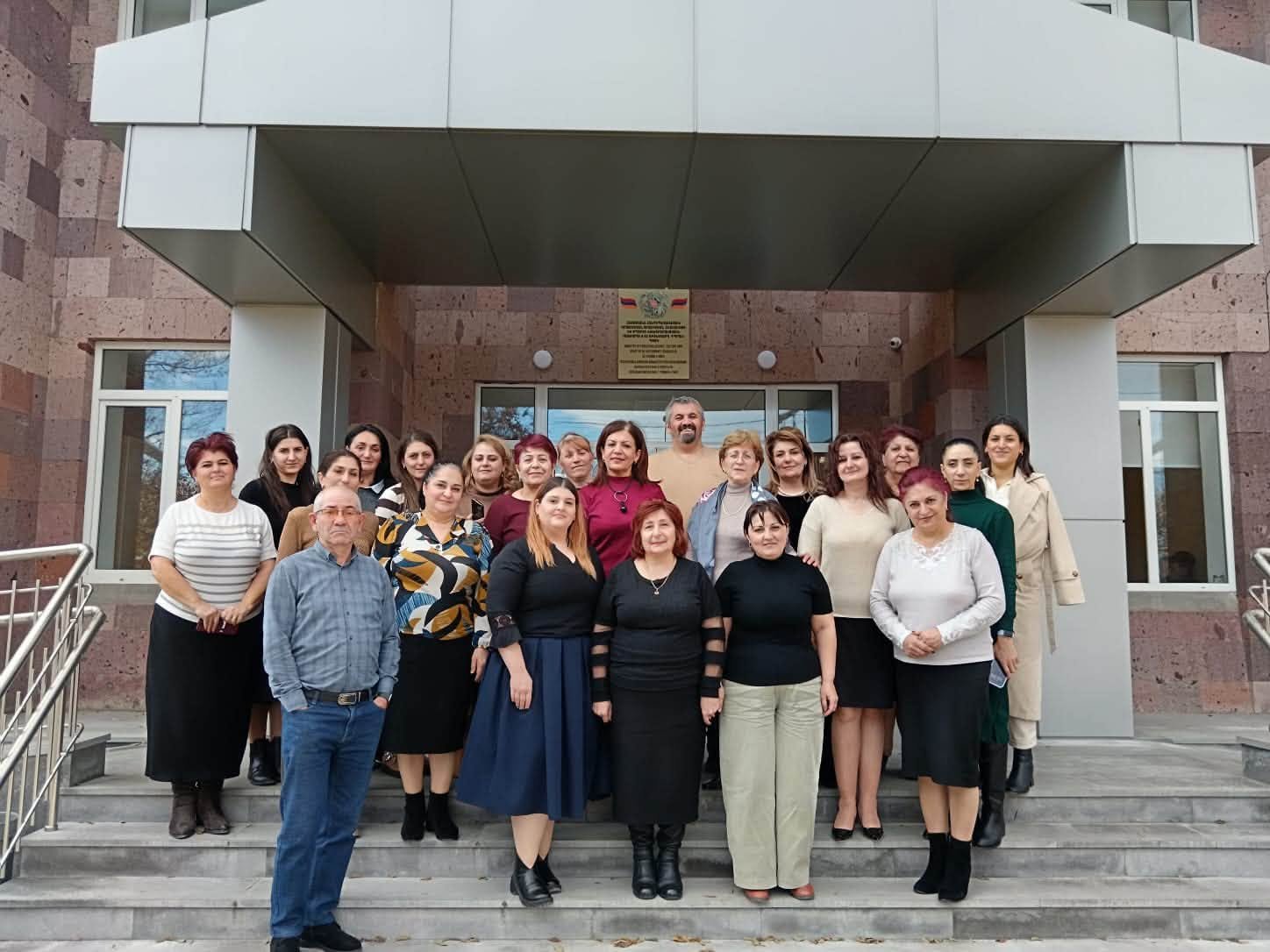
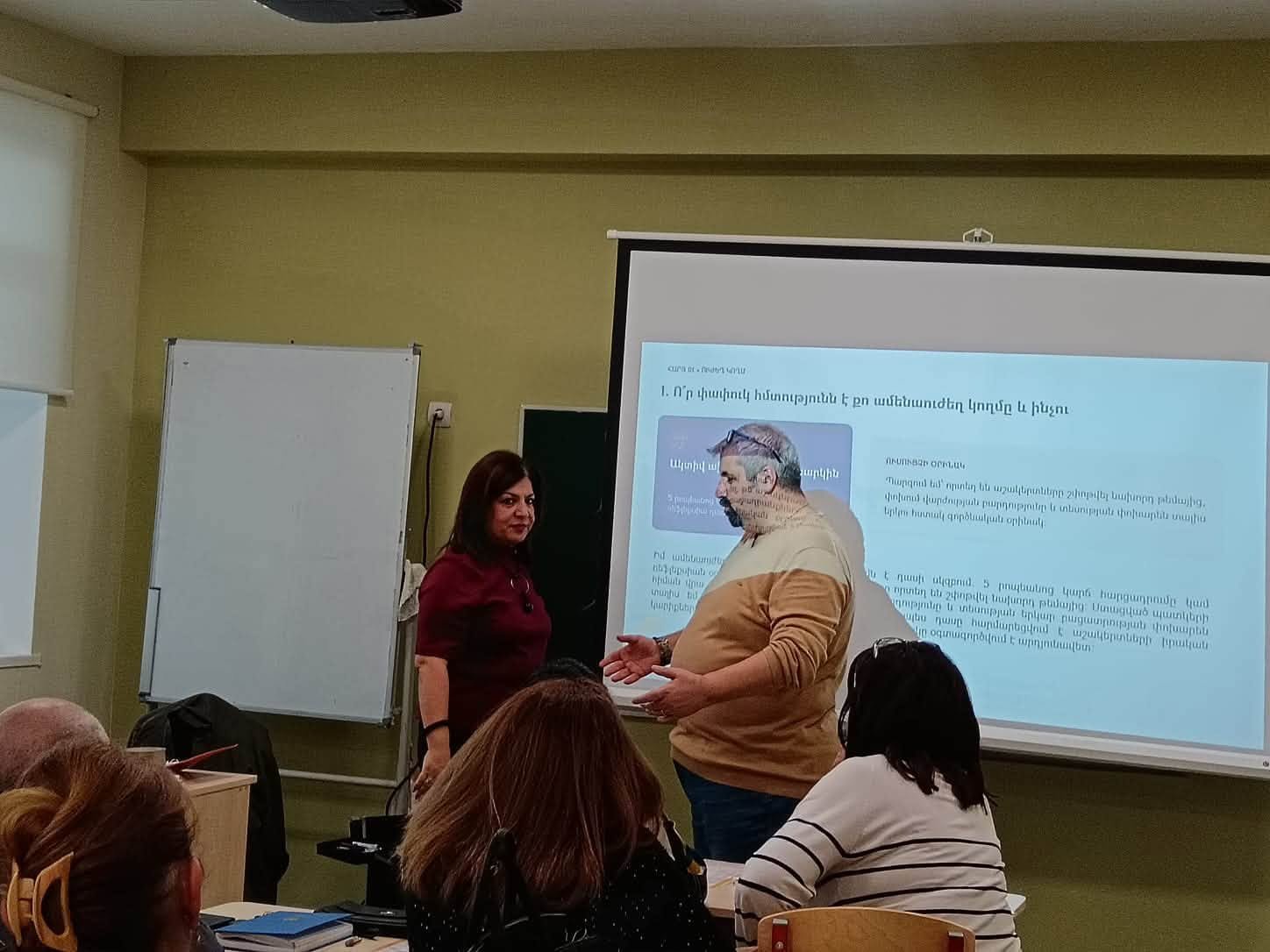
On 21 November 2026, 24 teachers of Gyumri Secondary School No. 45 took part in the InfoSkills one-day training “Soft skills for teachers”. How do you listen to a student, talk calmly with a worried parent, keep your composure in a tense moment and build a safe classroom? Here is how the day was built: 4 blocks, 6 hours, 70% practice, and tools a teacher can use in the very next lesson.

A teacher’s day is not only about the subject. It is about the student who has “switched off” in the back row, the parent who calls in the evening upset about a grade, the colleague with whom you have to share an extra workload, and the moment when the lesson is disrupted for the third time and you feel your voice is about to rise.
These moments are not solved with knowledge of the subject. They are solved with listening, self-control, clear words and the ability to agree. In other words, with soft skills.
This is not just an impression. In the OECD’s international TALIS 2018 survey, about one in five lower-secondary teachers (18%) said they experience “a lot” of stress in their work [1]. Researchers Patricia Jennings and Mark Greenberg describe a “prosocial classroom” model: teachers’ social and emotional competence and well-being shape their relationships with students, how well they manage the class, and the overall classroom climate [2].
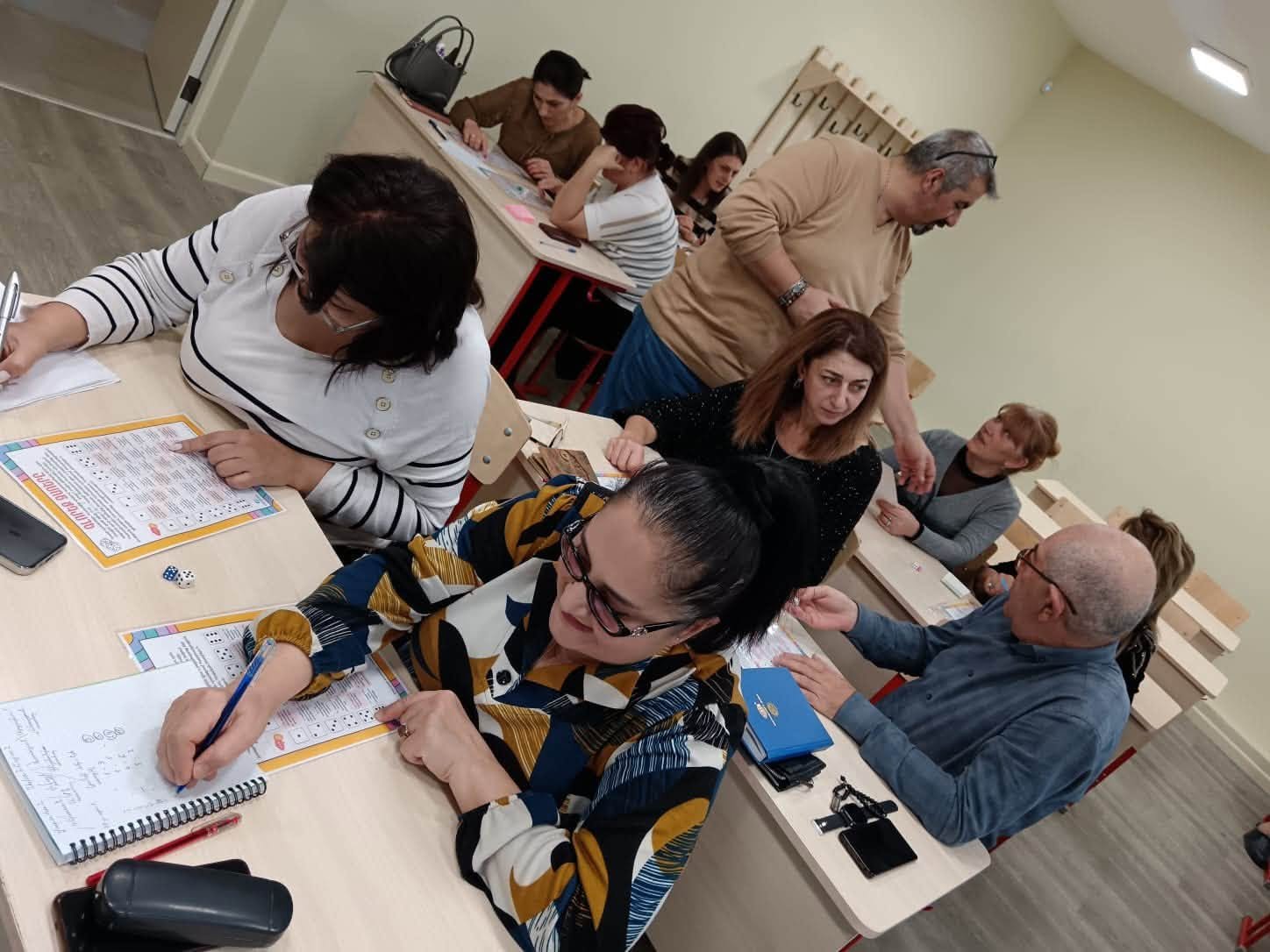
That was the focus of the InfoSkills one-day training “Soft skills for teachers: communication, emotional resilience and leadership in the classroom”, held on 21 November 2026 at Gyumri Secondary School No. 45, with 24 teachers taking part.
Why this training and how it was built
The training is based on the InfoSkills programme “Soft skills: from personal growth to leadership” and adapted to the school environment. From the programme’s 4 modules we selected the topics teachers use most often in their daily work.
The day moved from the inside out: first the teacher looks at themselves, then at the conversation with the student and the parent, then at conflict and classroom climate, and finally at their role as a leader. Four blocks of 90 minutes each, with practice taking up about 70% of the time.
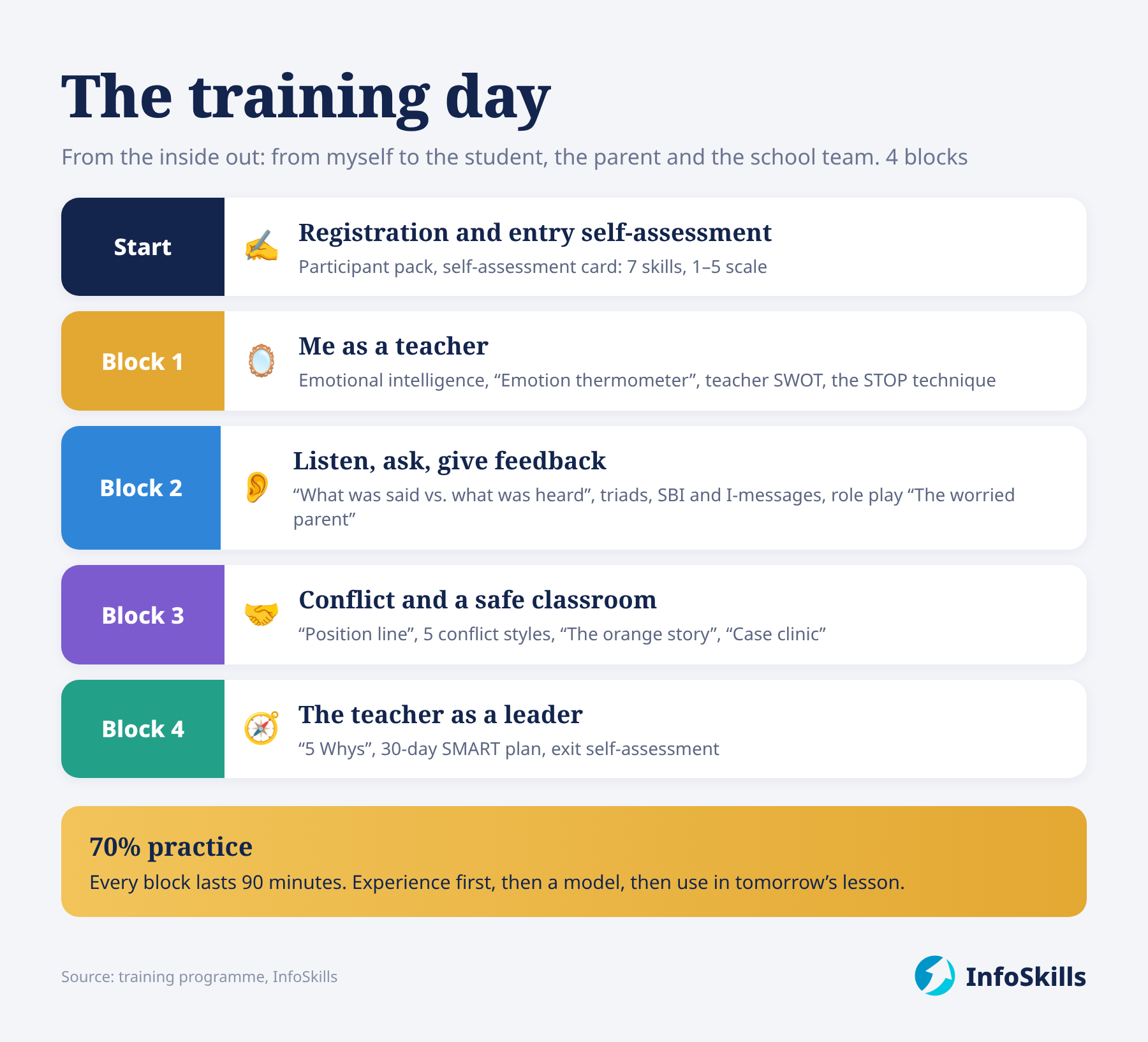
At registration, each participant filled in an entry self-assessment card: 7 skills on a scale of 1 to 5. It is not a test or an exam but a mirror. It shows where you are starting from, so that at the end of the day you can see what has changed.
Block 1. Me as a teacher: self-awareness and emotional resilience
The day began with the exercise “The teacher I remember”. Everyone introduced themselves and named one quality of a teacher they remember from their own school years. We wrote the qualities on a poster, and the group soon noticed something important: almost none of them were about subject knowledge. “Listened to us”, “was fair”, “believed in me”, “never humiliated anyone”. Most of what we remember about good teachers are soft skills.
Then came a short look at emotional intelligence. In the model of Daniel Goleman and his co-authors it has four components: self-awareness, self-management, social awareness and relationship management [3]. We looked at each one through school examples.
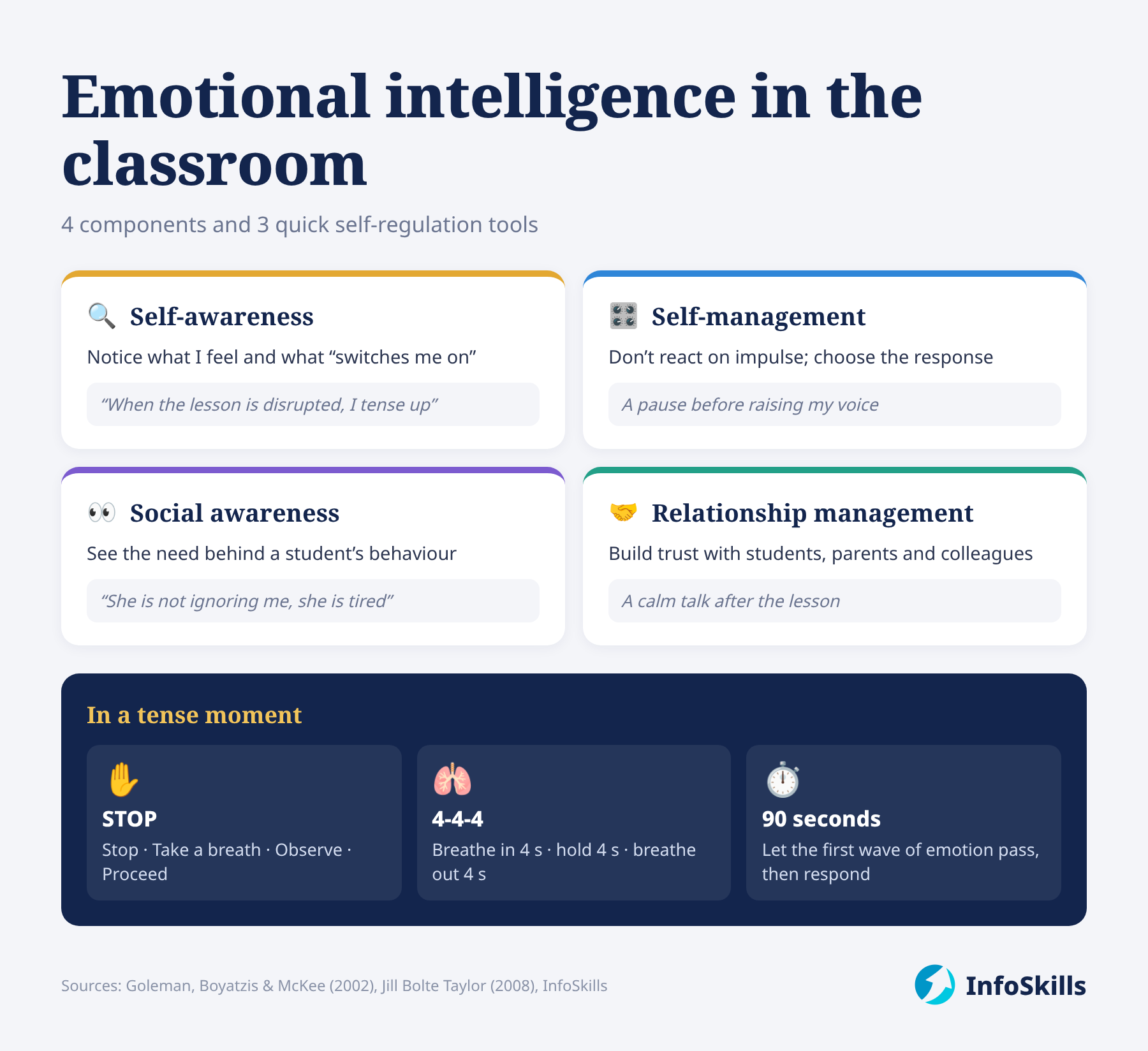
In the “Emotion thermometer” exercise, participants mapped their working day and marked the moments when tension rises: the first lesson after a break, an unannounced inspection, a call from a parent. Then each person completed a personal teacher SWOT: strengths, areas for growth, opportunities and threats.
The block ended with tools for the tense moment:
- STOP: Stop, Take a breath, Observe, Proceed.
- 4-4-4 breathing: breathe in for 4 seconds, hold for 4, breathe out for 4.
- The “90-second rule”: neuroanatomist Jill Bolte Taylor writes that the physiological wave of anger passes in about 90 seconds, and if it lasts longer, it is because we keep feeding it with our thoughts [4]. It is a practical rule of thumb, not a precise scientific constant, but it works well as a reminder: let the first wave pass, then respond.
Block 2. Listen, ask, give feedback
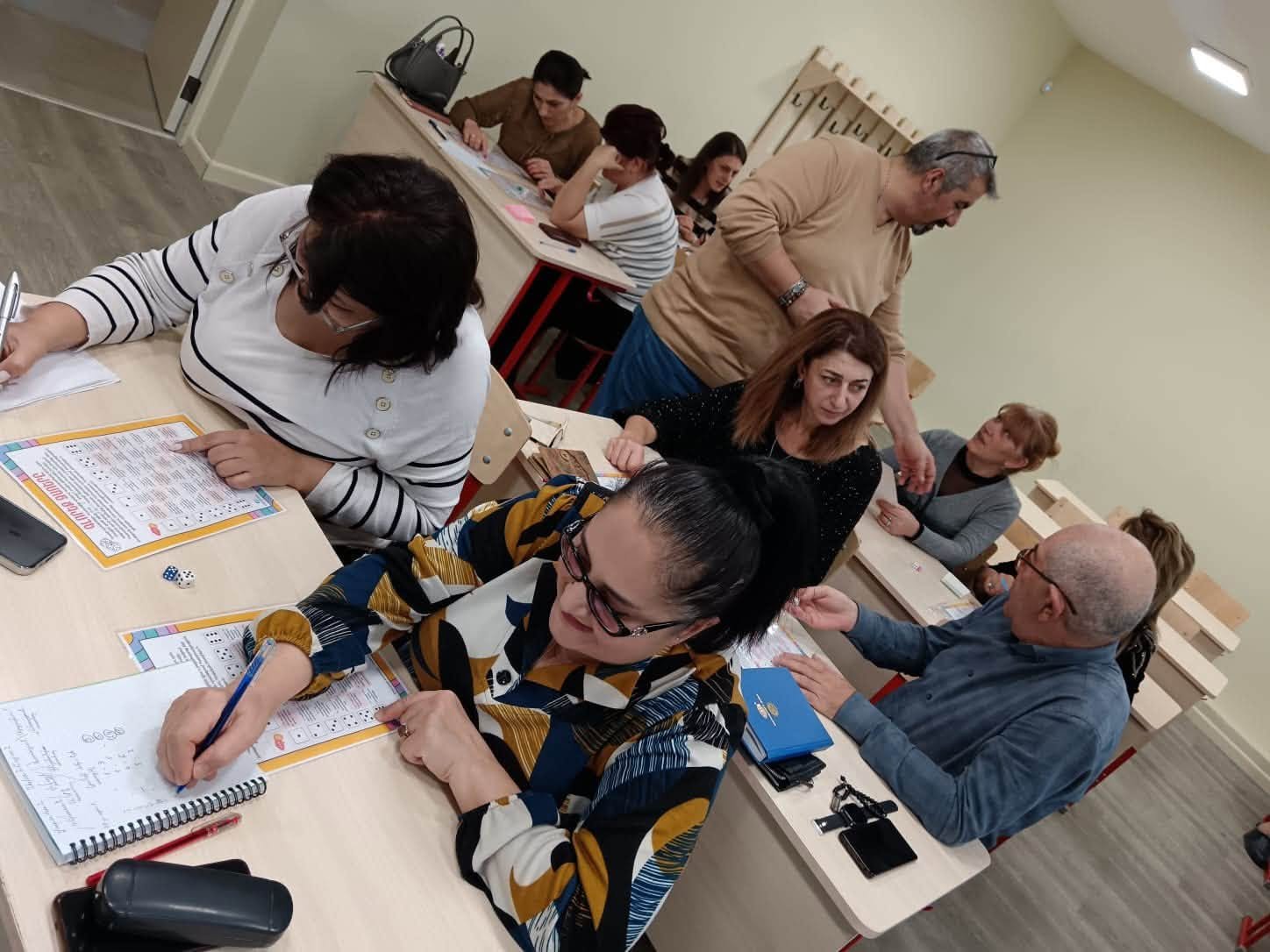
The second block opened with “What was said vs. what was heard”. In pairs, one person describes a picture and the other draws it, first without asking questions, then with questions. The difference between the two drawings is the best argument for why listening is an active process.
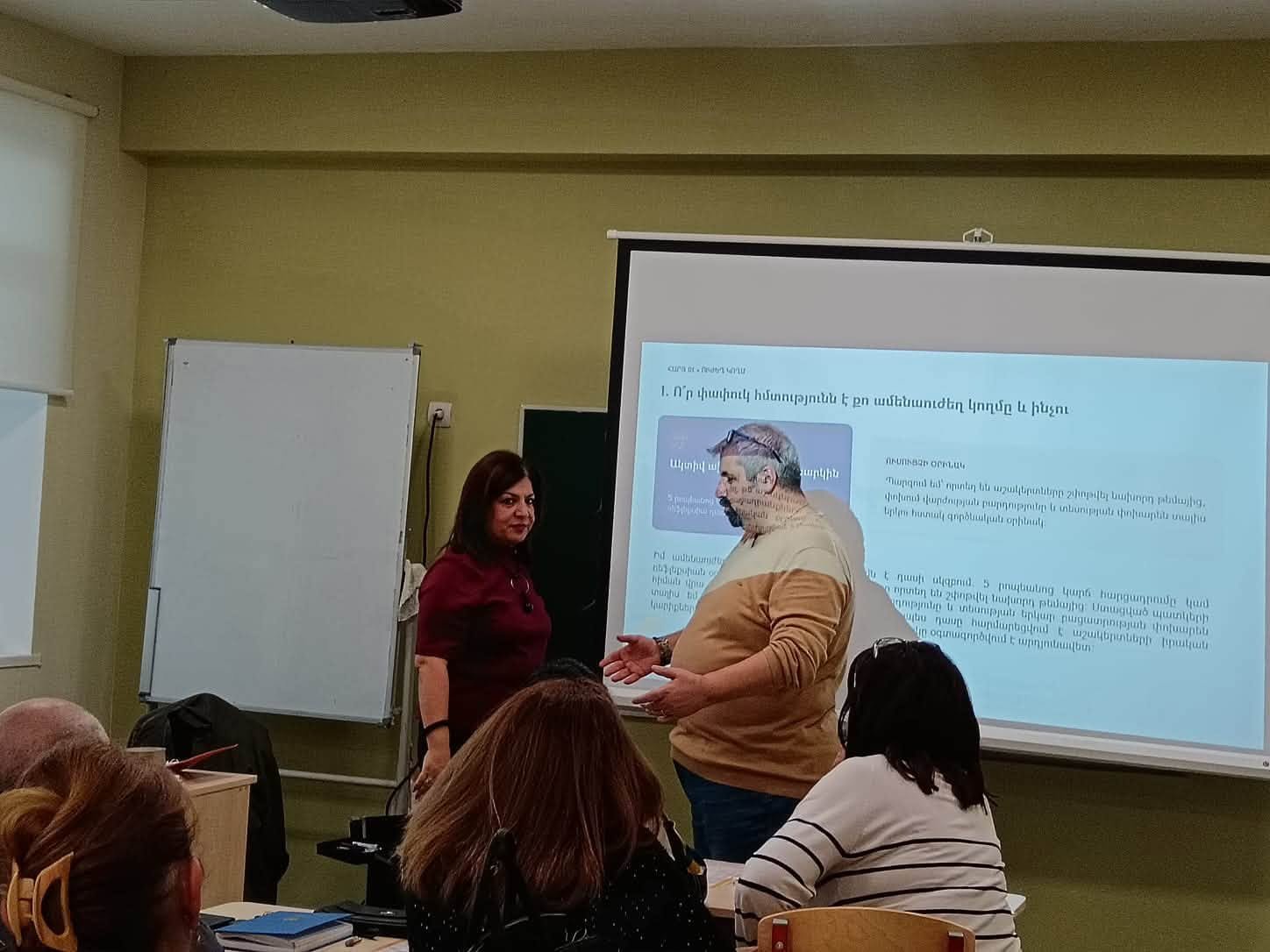
The term active listening was coined by psychologists Carl Rogers and Richard Farson [5]. In triads (speaker, listener, observer), participants practised its 4 techniques using school situations, while the observer marked on a checklist which techniques the listener used.
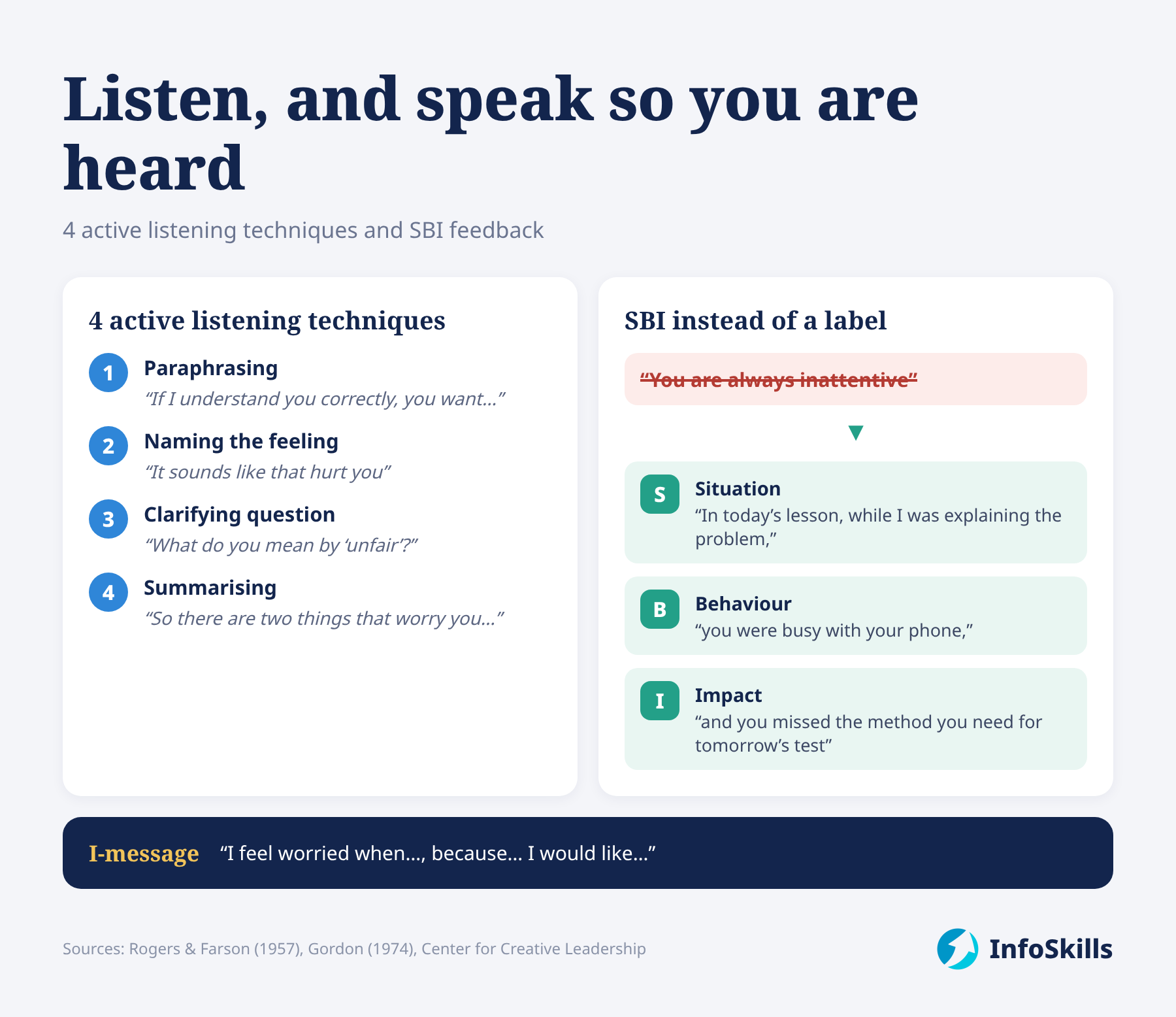
Next we turned to feedback. A label like “You are always inattentive” describes the person, not the behaviour, so it rarely changes anything. The SBI model (Situation, Behaviour, Impact) of the Center for Creative Leadership turns a label into a concrete, verifiable description [6]. In addition, we practised the I-message, a concept introduced in the 1960s by psychologist Thomas Gordon, who in 1974 wrote the book Teacher Effectiveness Training specifically for teachers [7].
The most lively part of the block was the role play “The worried parent”. One participant plays an upset parent, another plays the teacher, and an observer gives feedback using a card. The conversation follows 4 steps.
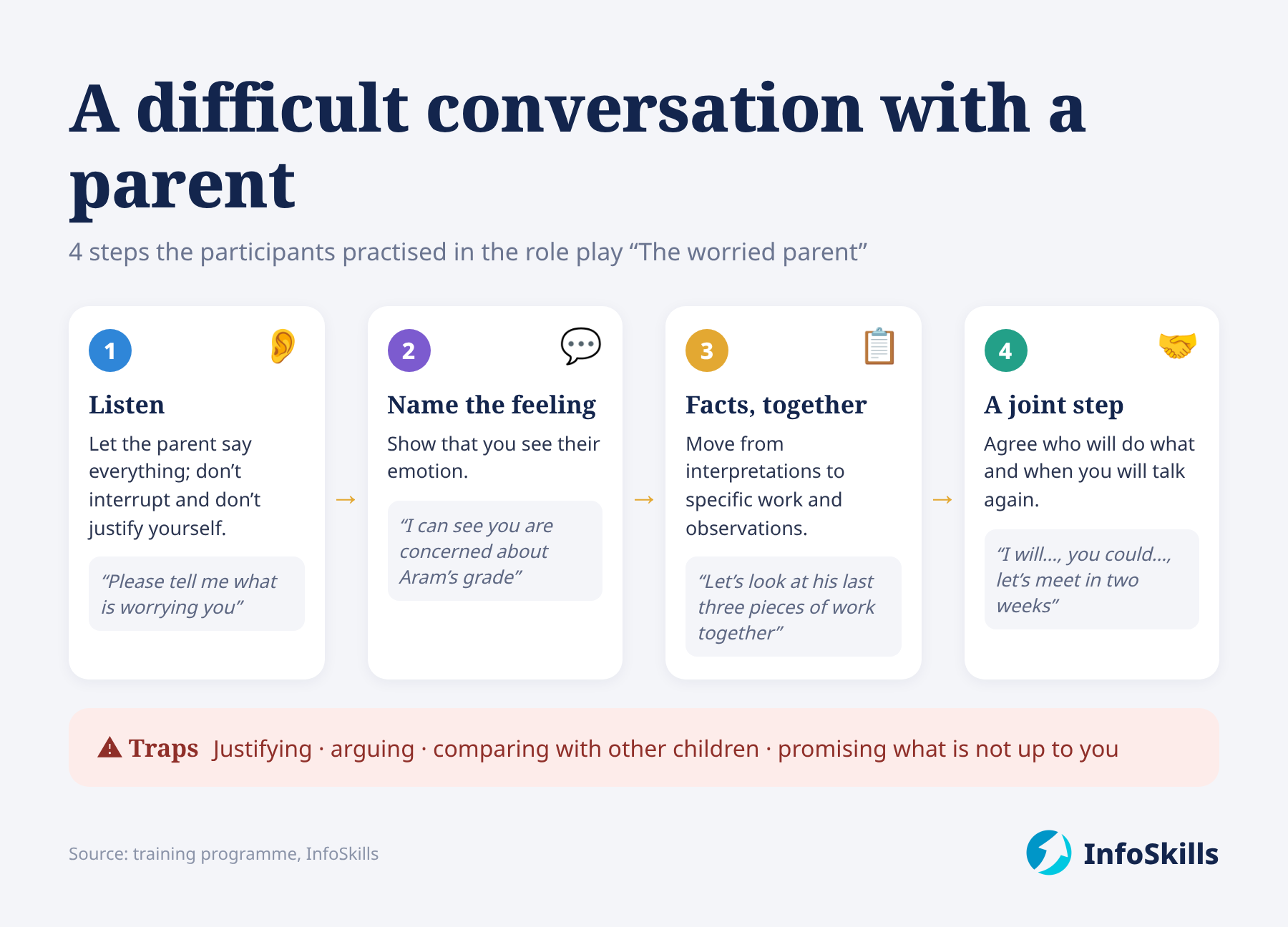
By the end of the block, each participant had their own “question bank” (10 open questions for talking with students and parents) and a plan for a difficult conversation about a real situation from their own practice.
Block 3. Conflict and a safe classroom
The afternoon began with the “Position line”. Participants placed themselves in the room according to how much they agreed with the statement “Conflict in the classroom is a bad thing”. The line showed at once how differently we see conflict, and the conversation that followed showed that conflict can also be an opportunity for growth.
We then looked at the 5 conflict-handling styles described by Kenneth Thomas and Ralph Kilmann along two dimensions, assertiveness and cooperativeness [8]. Each participant took a short self-test to see which style tends to dominate for them.
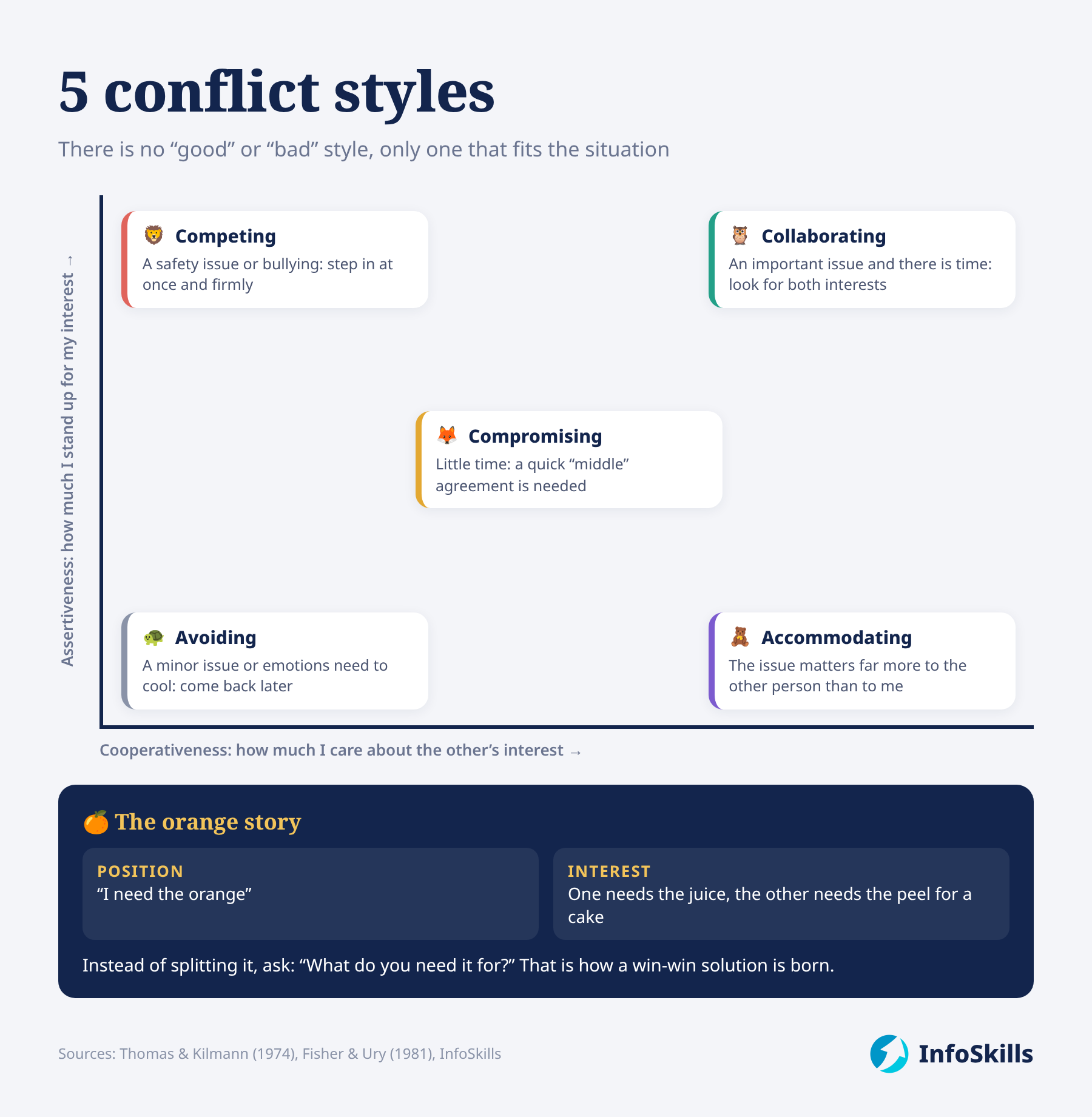
The orange story, made famous by Roger Fisher and William Ury in Getting to Yes, helps to separate a position from an interest [9]. Two people argue over one orange and finally cut it in half. One squeezes the juice and throws away the peel, the other uses the peel for a cake and throws away the fruit. If they had asked “What do you need it for?”, each could have had all of what they needed.
The core of the block was the “Case clinic”: 4 groups, 4 real school situations:
- Student and student: signs of bullying.
- Teacher and student: a disrupted lesson.
- Teacher and parent: a dispute over a grade.
- Teacher and colleague: sharing an extra workload.
Each group had 3 minutes to present its solution, and the others asked questions and added ideas.
The block ended with a conversation about psychological safety, a concept Amy Edmondson studied in work teams: a shared belief that it is safe to ask a question, admit a mistake or offer an idea without fear of being humiliated [10]. In a classroom this means that a student is not afraid to say “I don’t understand”. Here are 5 practices you can start with tomorrow:
- The right to make mistakes: say out loud that mistakes are part of learning, and show how you deal with your own.
- Class agreements: set 3–5 rules together with the students instead of only announcing them.
- Name the behaviour, not the person: use SBI, not labels.
- Recognition and thanks: notice effort and progress, not only results.
- A question for everyone: give thinking time before asking for answers, so that it is not always the same three students who speak.
Block 4. The teacher as a leader
The last block was about the teacher’s role as a leader and an initiator of change. Participants analysed a school problem with the “5 Whys” method, which goes back to Taiichi Ohno and the Toyota Production System: you ask “why?” several times in a row until you reach the root cause [11]. The aim is to find a cause that you can actually do something about, not someone to blame.
Each participant then wrote a 30-day personal development plan with a SMART goal: Specific, Measurable, Achievable, Relevant and Time-bound [12].
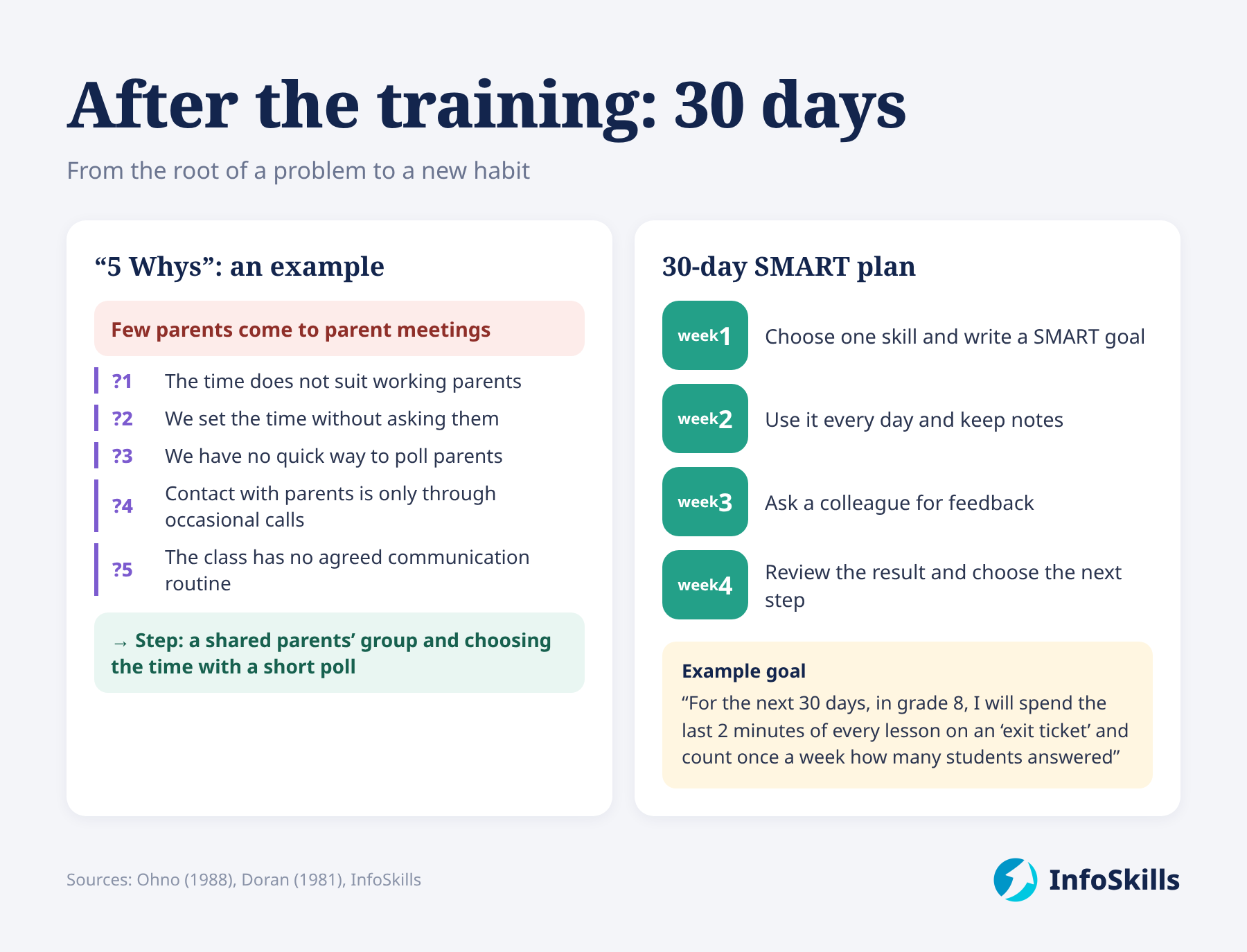
Why 30 days? Because a skill turns into a habit through repetition. In a well-known study by Phillippa Lally and colleagues, it took participants 66 days on average for a new behaviour to become automatic, with large individual differences [13]. Thirty days is not the finish line; it is a realistic first stage that is long enough to see the first results.
The day ended where it began: with the self-assessment card. Participants rated the same 7 skills again and compared them with the morning.
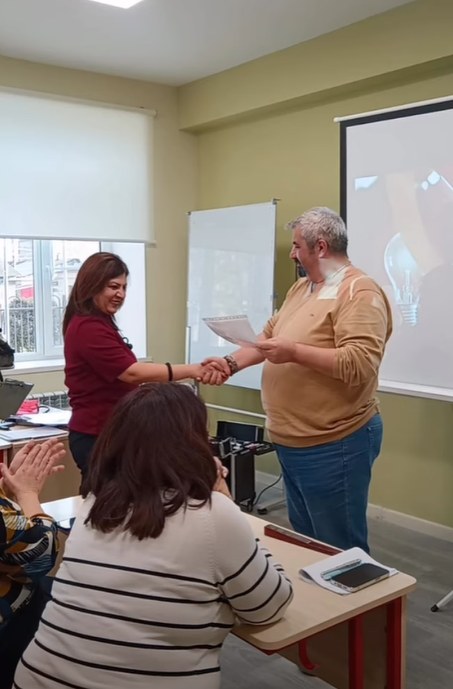
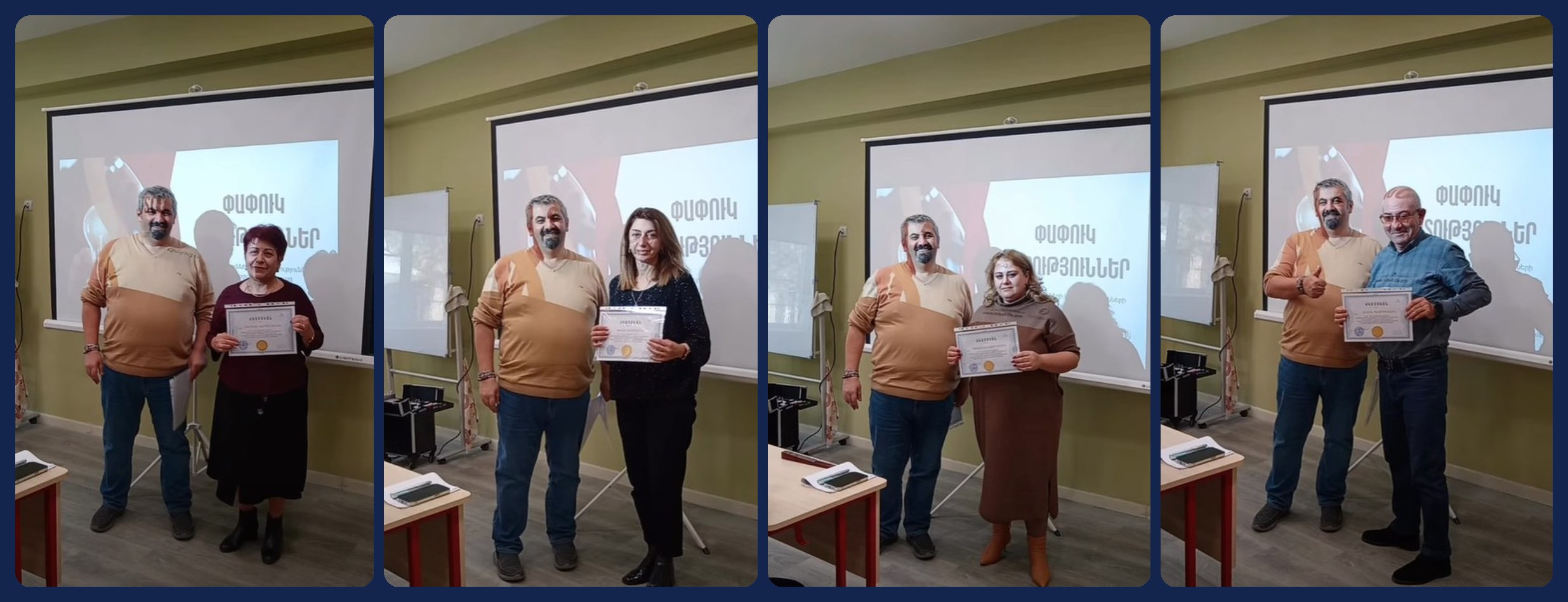
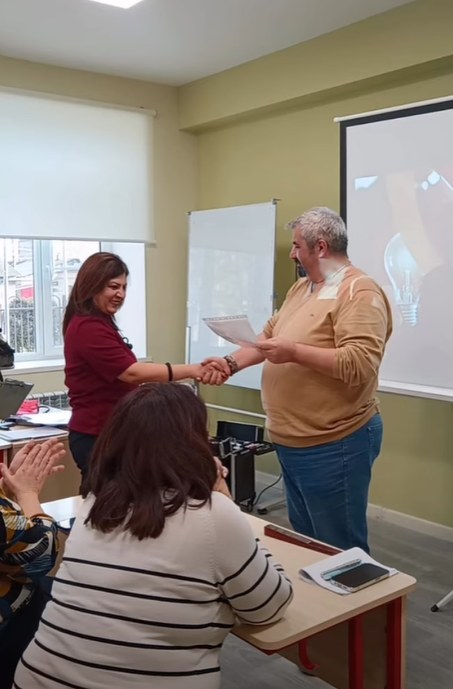
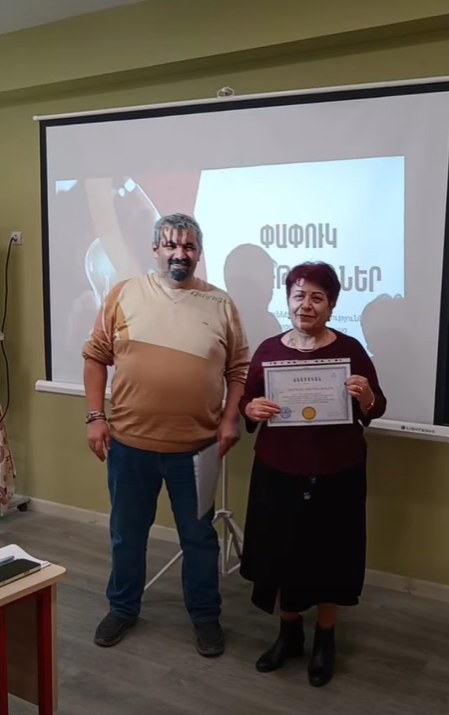
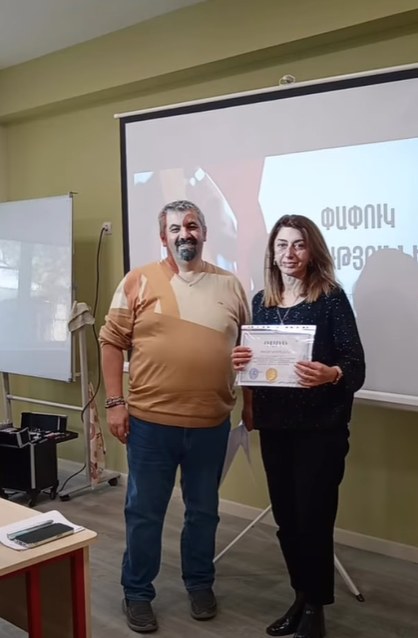
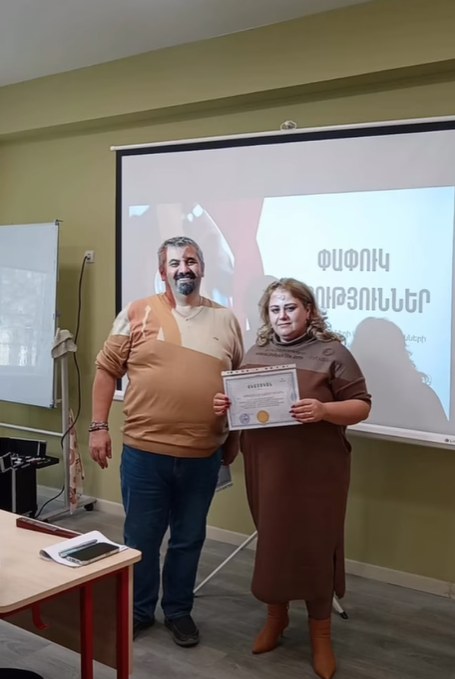
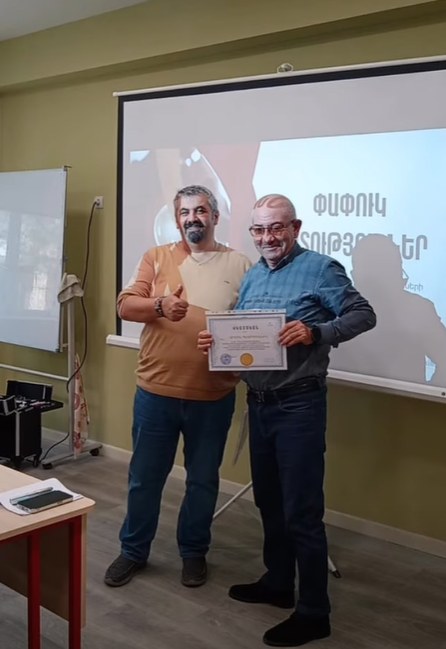
Then came the most festive moment of the day: every participant received a certificate of completion.
What participants take with them
- A group map of a good teacher’s skills and a personal SWOT.
- A list of their 2 main stress triggers and tools to deal with them.
- A question bank and a plan for a difficult conversation with a parent.
- A conflict-resolution algorithm and a draft of class agreements.
- A 30-day development plan with a SMART goal.
Participants’ impressions
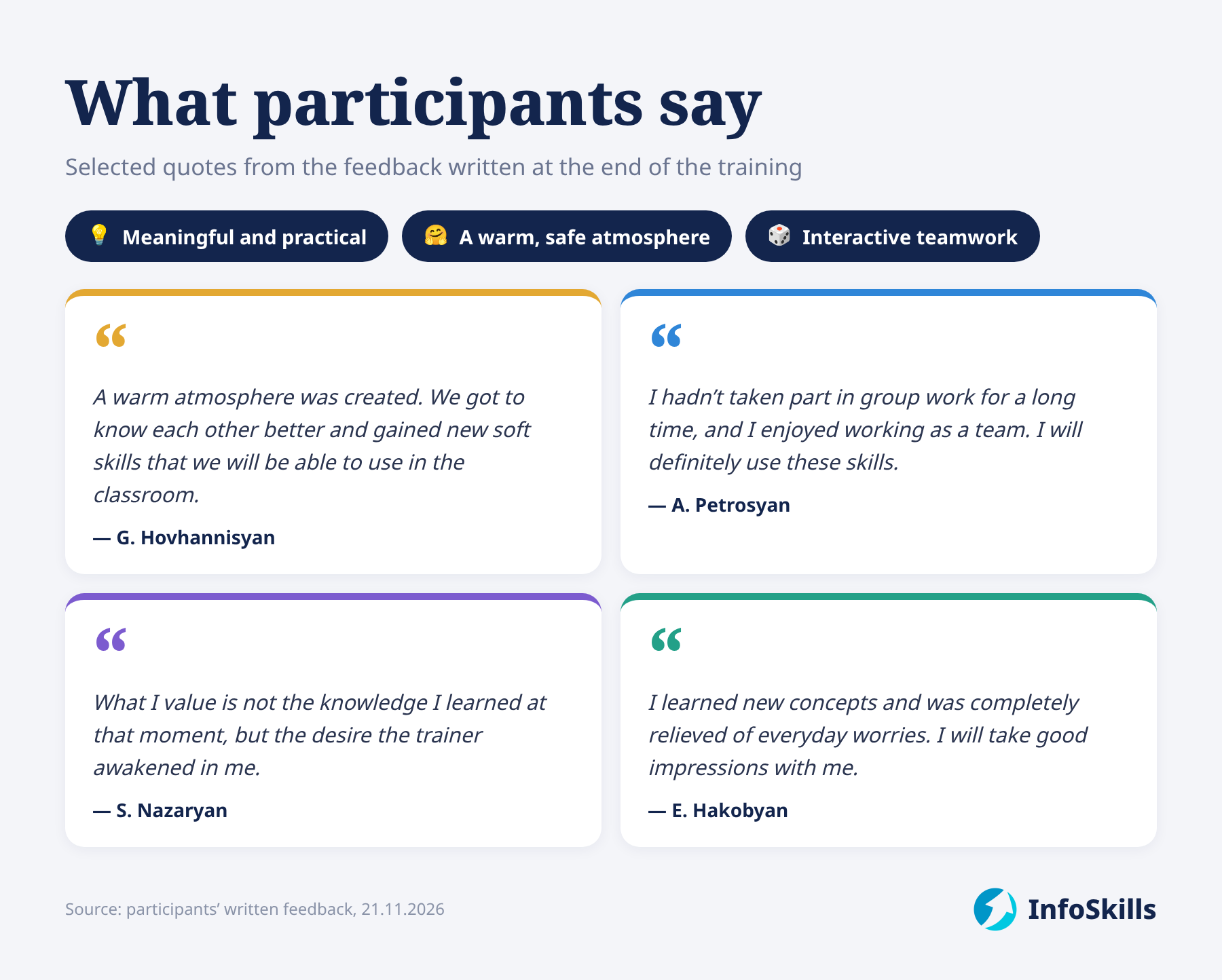
At the end of the day, participants shared their impressions in writing. Three ideas came up again and again: the training was meaningful and practical, the group had a warm, safe and trusting atmosphere, and the interactive and group work made the day lively, so that “the time flew by unnoticed”.
Many wrote that they finally understood clearly what soft skills are, got to know tools for managing emotions and the SWOT analysis, and are ready to use them in the classroom and in everyday life. Several said they were leaving with a sense of emotional stability, calm and inner satisfaction, as well as new acquaintances among colleagues.
“The discussions and group work made it more lively and avoided a one-sided presentation.” — Participant
Thank you
We thank the principal of Gyumri Secondary School No. 45, Astghik Vardanyan, for organising the training and for caring about her teachers’ professional growth. One participant wrote that she was glad the principal had found a way to bring this knowledge to the school. And thank you to all 24 teachers for their openness, energy and willingness to try every tool on themselves during the day.
What next
This one-day training can continue with the 180-hour InfoSkills programme “Soft skills: from personal growth to leadership”. If you would like to bring this training to your school, contact us or see the programme page.
#Gyumri #InfoSkills #Teachers #SoftSkills #EmotionalIntelligence #ActiveListening #ConflictManagement #ProfessionalDevelopment #Education
References
- OECD (2020). TALIS 2018 Results (Volume II): Teachers and School Leaders as Valued Professionals. Paris: OECD Publishing. doi.org
- Jennings, P. A., & Greenberg, M. T. (2009). The Prosocial Classroom: Teacher social and emotional competence in relation to student and classroom outcomes. Review of Educational Research, 79(1), 491–525. doi.org
- Goleman, D., Boyatzis, R., & McKee, A. (2002). Primal Leadership: Realizing the Power of Emotional Intelligence. Boston: Harvard Business School Press. See also: Emotional intelligence. Wikipedia. en.wikipedia.org
- Taylor, J. B. (2008). My Stroke of Insight: A Brain Scientist’s Personal Journey. New York: Viking. en.wikipedia.org
- Rogers, C. R., & Farson, R. E. (1957). Active Listening. Chicago: Industrial Relations Center, University of Chicago. See also: Active listening. Wikipedia. en.wikipedia.org
- Center for Creative Leadership. Use Situation-Behavior-Impact (SBI)™ to understand intent. ccl.org
- Gordon, T., with Burch, N. (1974). T.E.T.: Teacher Effectiveness Training. New York: Peter H. Wyden. See also: I-message. Wikipedia. en.wikipedia.org
- Thomas–Kilmann Conflict Mode Instrument (Thomas, K. W., & Kilmann, R. H., 1974). Wikipedia. en.wikipedia.org
- Fisher, R., & Ury, W. (1981). Getting to Yes: Negotiating Agreement Without Giving In. Boston: Houghton Mifflin. en.wikipedia.org
- Edmondson, A. (1999). Psychological safety and learning behavior in work teams. Administrative Science Quarterly, 44(2), 350–383. doi.org
- Ohno, T. (1988). Toyota Production System: Beyond Large-Scale Production. Portland, OR: Productivity Press. See also: Five whys. Wikipedia. en.wikipedia.org
- Doran, G. T. (1981). There’s a S.M.A.R.T. way to write management’s goals and objectives. Management Review, 70(11), 35–36. See also: SMART criteria. Wikipedia. en.wikipedia.org
- Lally, P., van Jaarsveld, C. H. M., Potts, H. W. W., & Wardle, J. (2010). How are habits formed: Modelling habit formation in the real world. European Journal of Social Psychology, 40(6), 998–1009. doi.org
Course: Soft Skills: From Personal Growth to Leadership
© 2026 InfoSkills, Varuzhan Avanesyan. Reuse only with the author's permission and a link to the source.













No comments yet. Be the first.